Billboard's Top 200 Album Sales
Key Takeaway
The week of October 8, 1983, captures a pivotal moment when rock royalty, pop innovation, and cinematic soundtracks converged to define the early MTV era.
The Police's "Synchronicity" commanded the summit while Michael Jackson's "Thriller" continued its historic reign, proving that 1983 was the year when music videos became as essential as the music itself.
This snapshot reveals an industry in transition—where album-oriented rock met the new wave, where movie soundtracks competed with established legends, and where the last gasp of arena rock collided head-on with synthesizer-driven pop that would dominate the rest of the decade.
As America watched The Police explore themes of psychology and synchronicity on MTV's heavy rotation, these ten albums represented more than just sales figures—they were the soundtrack to a nation discovering that music could be both seen and heard, experienced through television screens and concert arenas alike.
From Billy Joel's nostalgic crooning to Quiet Riot's metal rebellion, this particular week showcased the remarkable diversity that made the early 1980s one of the most eclectic periods in popular music history.
Join the newsletter for weekly chart rewinds
I send out a simple weekly newsletter every time a new article is published.
No spam.
No daily emails.
Just a quick note letting you know something new is live.
A Snapshot in Time
Before diving into the music, here's what else was happening in the world during this memorable week in October 1983:
The Korean Air Lines Flight 007 tragedy dominated headlines as international tensions escalated between the United States and Soviet Union following the September 1 shootdown. President Reagan continued to condemn the incident as Congress debated appropriate responses to what many called an act of Cold War aggression.
The United States prepared for its controversial invasion of Grenada, which would occur just seventeen days later on October 25th. Military planning was already underway as concerns grew about the safety of American medical students on the Caribbean island and the construction of a Soviet-Cuban military facility.
The final episode of M*A*S*H had aired six months earlier, but America was still processing the end of an era.
Television audiences were now embracing new shows like "The A-Team" and "Knight Rider," while MTV continued reshaping how Americans consumed music, now reaching over 17 million households.
The compact disc was gaining momentum as a commercial format.
Sony and Philips continued their push to convince both record labels and consumers that digital audio was the future, though vinyl still dominated sales.
Early adopters were paying premium prices for CD players and the limited catalog of available titles.
Sally Ride had become America's first woman in space just four months earlier in June, inspiring a generation of young women to pursue careers in science and technology.
Her mission aboard the Space Shuttle Challenger represented a breakthrough moment in both space exploration and gender equality.
The economy was rebounding from the severe recession of 1981-82, with unemployment beginning to decline from its peak of over 10 percent.
Consumer confidence was returning, and Americans were once again spending money on entertainment, including record albums that averaged around $8.98 for vinyl LPs.
We at Camelot would often charge you $7.99 per release. The $8.98 price point was a suggested Retail price.
Just as America was experiencing these transformative moments, these were the albums spinning on turntables and cassette decks across the nation.
This Week’s Top Ten Albums in America
1. Synchronicity – The Police
Featured hits: "Every Breath You Take," "King of Pain," "Wrapped Around Your Finger"
The Police's swan song dominated charts and MTV, blending new wave sophistication with radio-friendly hooks that appealed across demographic lines.
2. Thriller – Michael Jackson
Featured hits: "Billie Jean," "Beat It," "Wanna Be Startin' Somethin'"
Nearly a year after its release, Jackson's masterpiece refused to budge from the upper reaches, with its groundbreaking videos keeping it culturally relevant and commercially unstoppable.
3. Flashdance – Soundtrack
Featured hits: "Flashdance... What a Feeling" by Irene Cara, "Maniac" by Michael Sembello
This soundtrack transformed movie tie-ins into must-have albums, proving that cinematic success could translate directly into chart dominance and cultural phenomenon.
4. An Innocent Man – Billy Joel
Featured hits: "Tell Her About It," "Uptown Girl," "An Innocent Man"
Joel's affectionate homage to the doo-wop and soul music of his youth resonated with audiences craving both nostalgia and contemporary production values.
5. Pyromania – Def Leppard
Featured hits: "Photograph," "Rock of Ages," "Foolin'"
British hard rock met American pop sensibility in this polished arena-rock statement that helped define the sound of 1980s mainstream metal.
6. Metal Health – Quiet Riot
Featured hits: "Cum On Feel the Noize," "Metal Health (Bang Your Head)"
The first heavy metal album to reach number one on the Billboard 200, proving that headbangers had serious purchasing power and MTV was their new champion.
7. Faster Than The Speed Of Light – Bonnie Tyler
Featured hits: "Total Eclipse of the Heart," "Faster Than the Speed of Night"
Tyler's powerful vocals and Jim Steinman's theatrical production created one of the decade's most distinctive power-ballad experiences.
8. The Principle Of Moments – Robert Plant
Featured hits: "Big Log," "In the Mood"
Led Zeppelin's golden god successfully reinvented himself as a solo artist, embracing synthesizers and atmospheric production while maintaining his rock credibility.
9. Reach The Beach – The Fixx
Featured hits: "One Thing Leads to Another," "Saved by Zero"
New wave's intelligent edge found commercial success as The Fixx delivered socially conscious lyrics wrapped in infectious, keyboard-driven arrangements.
10. Greatest Hits – Air Supply
Featured hits: "Making Love Out of Nothing at All," "All Out of Love," "The One That You Love"
The Australian soft-rock duo's compilation satisfied adult contemporary audiences seeking romantic escapism during an era of musical experimentation.
A favorite song of mine! The Fixx - One Thing Leads To Another!
New To Vinyl- Store Them Properly So They Won't Warp!



Album of the Week Spotlight
The Police - Synchronicity

The Police - Synchronicity
 Album of the Week Spotlight
Why I Picked It
"Synchronicity" represents the perfect intersection of artistic ambition and commercial accessibility—a rare achievement that few bands ever manage.
The Police were at the absolute peak of their creative powers, crafting an album that worked equally well on FM radio, MTV, and in critical conversations about the state of popular music.
While tensions within the band were reaching a breaking point, that creative friction produced some of the most compelling and sophisticated pop-rock music of the decade.
This wasn't just another new wave album; it was a statement that intelligent, musically complex material could dominate the mainstream without compromise.
Where It Fits in the Career of The Police and Sting as Artists
"Synchronicity" arrived as the fifth and final studio album from The Police, marking both their commercial zenith and their artistic farewell.
Following the experimental textures of "Ghost in the Machine" (1981), the band refined their approach, creating their most cohesive and accessible work.
For Sting, this album represented the culmination of his evolution from jazz-influenced bassist to sophisticated songwriter exploring psychology, philosophy, and literary themes.
Andy Summers' guitar work reached new heights of atmospheric innovation, while Stewart Copeland's reggae-influenced drumming provided the rhythmic foundation that distinguished The Police from their contemporaries.
The album's success—six weeks at number one in the UK, seventeen weeks atop the US charts—gave each member the confidence and financial security to pursue solo careers.
Sting would soon embark on his journey as a solo artist with "The Dream of the Blue Turtles" (1985), embracing jazz fusion and world music influences.
The band would never record another studio album together, making "Synchronicity" their definitive artistic statement and a bittersweet closing chapter to one of rock's most innovative trios.
Impact on Charts and Culture
"Synchronicity" didn't just top the charts—it dominated them with a persistence that demonstrated the album's cultural penetration.
The record spent a total of seventeen non-consecutive weeks at number one on the Billboard 200, eventually selling over eight million copies in the United States alone.
"Every Breath You Take" became the year's biggest single, spending eight weeks atop the Hot 100 and winning the Grammy for Song of the Year, though its dark, obsessive lyrics were often misinterpreted as romantic rather than disturbing.
The album's impact extended far beyond sales figures.
MTV's heavy rotation of the videos for "Every Breath You Take," "King of Pain," and "Wrapped Around Your Finger" established The Police as visual artists as compelling as they were musical.
The striking black-and-white cinematography and symbolic imagery in their videos set new standards for the medium.
The album's title and themes—inspired by Arthur Koestler's book "The Roots of Coincidence" and Carl Jung's concept of synchronicity—brought intellectual depth to mainstream rock, proving that pop audiences were hungry for substance alongside style.
Why It Still Matters Today
Forty-three years later, "Synchronicity" stands as one of the most important albums in the history of recorded pop music, representing the moment when new wave matured into something timeless rather than trendy.
Unlike many 1980s productions that sound dated due to excessive synthesizers and drum machines, "Synchronicity" maintains its sonic relevance through the organic interplay between Summers' guitar, Copeland's drums, and Sting's bass and vocals.
The production, while unmistakably of its era, emphasizes musicianship and songcraft over technology.
The album's influence reverberates through contemporary music.
Artists from Imagine Dragons to The Killers have cited The Police's ability to merge rock, reggae, and pop as a formative influence.
"Every Breath You Take" remains one of the most-played songs in radio history and has been sampled or covered countless times, most notably by Puff Daddy in "I'll Be Missing You" (1997).
The song's ubiquity has made it a cultural touchstone—instantly recognizable across generations.
More importantly, "Synchronicity" proved that a band could achieve massive commercial success while maintaining artistic integrity and musical sophistication.
In an era when rock was fragmenting into subgenres and MTV was accused of prioritizing image over substance, The Police demonstrated that intelligence and accessibility weren't mutually exclusive.
The album remains a masterclass in songwriting economy—every note serves a purpose, every lyric carries weight, and nothing is wasted.
It's this combination of craft and inspiration that ensures "Synchronicity" will continue to be studied, celebrated, and rediscovered by each new generation of music lovers.
My Connection
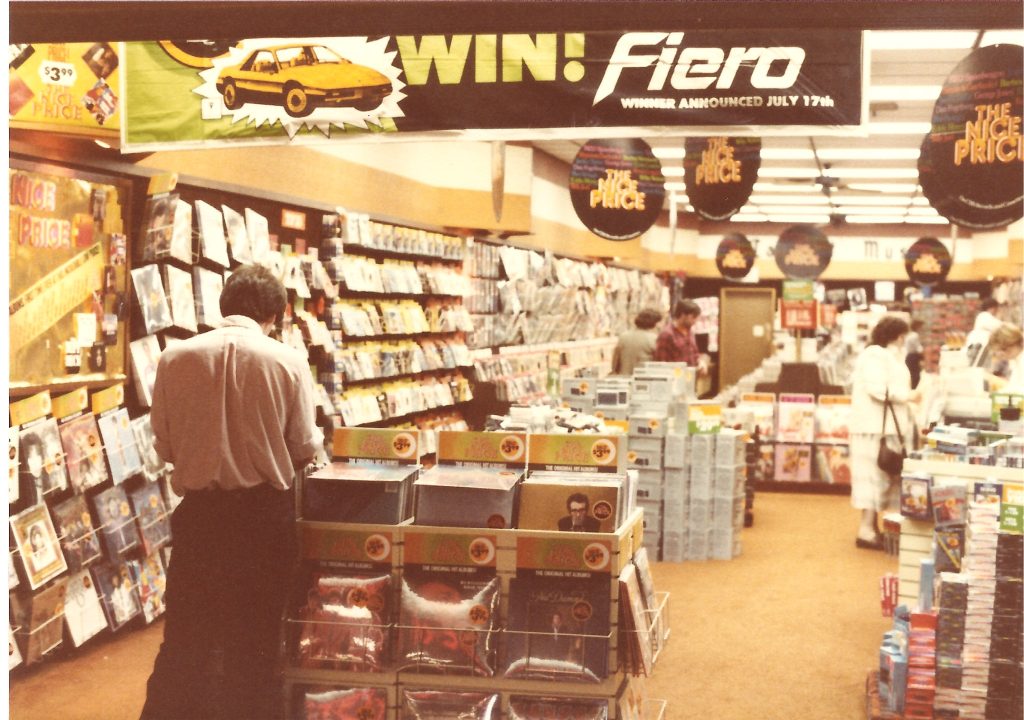
At the time, I was managing the Camelot Music store at Eastview Mall in Rochester, New York, and "Synchronicity" was absolutely everywhere.
This was a very popular in-store playlist recording, though I'm proud to say that my employees were disciplined about not playing it too often—we understood that even great music could become grating when heard ten times a day.
The album received heavy airplay on Rochester's FM radio stations, particularly 96.5 WCMF-FM, where the DJs embraced it as a top choice for their rotations.
What struck me most was that we didn't need to build elaborate displays for "Synchronicity." The album sold itself through sheer cultural momentum and word-of-mouth.
When I featured it in our large plexiglass storefront display, customers would walk in already knowing they wanted it—they'd heard "Every Breath You Take" on the radio, seen the video on MTV, or had a friend rave about the album's depth.
It was one of those rare releases where our job wasn't to convince people to buy it, but simply to keep it in stock and make sure they could find it quickly.
I remember distinctly how the album appealed across age groups and musical preferences.
Teenagers bought it for the radio hits, college students appreciated the lyrical sophistication, and older customers who might have dismissed new wave as "noise" found The Police's musicianship and melody undeniable.
In many ways, working with "Synchronicity" taught me that truly great albums transcend marketing—they create their own demand through the quality of the work itself.
1980s Music Chart History
Upgrade The Sound You Listen To, Your Ears Will Thank You!


Reflections & Insights
The week of October 8, 1983, reveals a music industry caught between eras—the album-oriented rock of the 1970s was still influential, but the MTV generation was rapidly reshaping what it meant to be a successful artist.
The presence of both The Police and Michael Jackson in the top two positions wasn't coincidental; these were artists who understood that the future belonged to those who could master both audio and visual mediums.
The genre diversity on this particular chart is striking. Within these ten albums, listeners could find new wave (The Police, The Fixx), pop (Michael Jackson, Billy Joel), hard rock and heavy metal (Def Leppard, Quiet Riot), power ballads (Bonnie Tyler), soundtrack pop (Flashdance), classic rock reinvention (Robert Plant), and adult contemporary (Air Supply).
This eclecticism reflected an industry that hadn't yet been fully segmented by radio formats and niche marketing. A typical teenager in 1983 might own albums by both Quiet Riot and Billy Joel without any sense of contradiction.
The chart also demonstrates the growing power of the movie soundtrack as a commercial force.
"Flashdance" proved that a film's music could become just as important as the movie itself—sometimes more so.
This trend would accelerate throughout the decade, culminating in juggernauts like "Dirty Dancing" and "Top Gun."
Perhaps most significantly, this week captured the moment when the album—as opposed to the single—remained the primary unit of musical consumption.
Artists still conceived their work in album terms, creating cohesive statements rather than collections of potential singles.
Fans expected full albums to contain deep cuts and hidden gems alongside the hits.
This album-centric culture would begin eroding within a few years, making charts like this one artifacts of a particular moment in music history when the LP still reigned supreme.
 Trivia Corner
The Police's "Synchronicity" album cover featured striking color-coded photographs of the three band members, but what many don't know is that the color scheme was inspired by the three primary colors of light used in television and video production—red, blue, and green. This was a deliberate nod to MTV's importance in the album's success.
Michael Jackson's "Thriller" had been on the Billboard 200 for forty-seven consecutive weeks by October 8, 1983, and wouldn't leave the chart entirely until 1984. It would eventually spend a record-breaking 37 weeks at number one and remain on the chart for a total of 190 weeks.
Quiet Riot's "Metal Health" made history as the first heavy metal album to reach number one on the Billboard 200, dethroning The Police's "Synchronicity" on November 26, 1983. Ironically, their biggest hit "Cum On Feel the Noize" was a cover of a 1973 song by British glam rock band Slade.
Robert Plant's "Big Log" marked a significant departure from his Led Zeppelin sound, featuring synthesizers prominently in the mix. Plant initially worried that Zeppelin fans would reject his new direction, but the song became his most successful solo single, reaching number 20 on the Billboard Hot 100.
Billy Joel wrote "Uptown Girl" while dating supermodel Elle Macpherson, though he later admitted the song was also inspired by the vocal group The Four Seasons and their classic sound. Joel would marry Christie Brinkley the following year, and she starred in the song's iconic music video.
 Frequently Asked Questions (FAQ)
What made "Synchronicity" by The Police so successful in 1983?
"Synchronicity" succeeded through a combination of factors: impeccable songwriting, the band's musical sophistication, heavy MTV rotation, and perfect timing.
The album arrived when new wave was transitioning from underground to mainstream, and The Police had the musical chops and visual appeal to bridge that gap.
"Every Breath You Take" became an inescapable cultural phenomenon, spending eight weeks at number one and winning Grammy awards, while the album's deeper cuts satisfied critics and serious music fans.
How long did Michael Jackson's "Thriller" stay on the charts?
"Thriller" spent an unprecedented 190 weeks on the Billboard 200 chart after its November 1982 release, including 37 non-consecutive weeks at number one.
By October 1983, it had already been on the chart for forty-seven weeks and was still in the top five.
The album's longevity was sustained by a series of groundbreaking music videos and an unprecedented seven top-ten singles.
Why was 1983 such an important year for music videos?
By October 1983, MTV had been on the air for just over two years, and its influence on music consumption had become undeniable.
Labels and artists realized that a compelling video could make or break a song's success.
The presence of visually striking artists like The Police, Michael Jackson, and Def Leppard on this week's chart reflects how the music video had become essential rather than optional for mainstream success.
What happened to The Police after "Synchronicity"?
The Police never recorded another studio album after "Synchronicity," though they didn't officially announce their breakup until 1986.
Creative tensions, particularly between Sting and Stewart Copeland, had reached a breaking point.
Each member pursued solo projects, with Sting achieving the most commercial success.
The band briefly reunited for their Rock and Roll Hall of Fame induction in 2003 and mounted a highly successful reunion tour in 2007-2008.
How did heavy metal break into the mainstream in 1983?
Metal's mainstream breakthrough in 1983 came through a combination of MTV exposure and more polished, radio-friendly production.
Def Leppard's "Pyromania" and Quiet Riot's "Metal Health" proved that metal could achieve massive commercial success when paired with strong melodies and visual appeal.
MTV initially resisted showing heavy metal videos, but the genre's popularity forced the network to embrace bands that could deliver both sonic power and visual excitement.
Join The Conversation
What were you listening to this week in history? Did you buy one of these albums when it was new?
Share your memories below, or join the discussion on our Music in the 1970s Facebook page to keep the needle spinning.
Follow Music In The 1970s
Love classic rock, soul, and everything 70s?
Join us for daily album insights, rare stories, and lively discussions.
Keep the golden era of music alive with fellow fans!
Visit Music In The 1970s
Music in the 1970s