Why I Built America’s Top 10 Albums — And Why It Matters to Me
Hi, I’m just a guy who grew up loving charts.
It started in the mid-to-late 1960s when I was a teenager.
Back then, I was the kid who pored over the sports pages every morning, tracking batting averages, pitching strikeouts, win-loss records, and ERAs as well.
During the winter, I tracked basketball stats, scoring per game averages, and teams’ win-loss records like they were the most important numbers in the world.
A New Obsession Was Born
At some point, that same obsession found a new home — music.
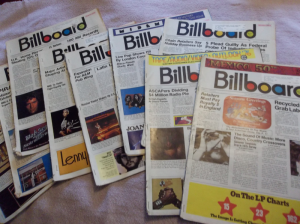
Specifically, Billboard magazine, which I discovered in the summer of 1969. From that moment on, I was hooked.
Producers, songwriters, chart positions, week-over-week movement — I studied it all like a second education.
A Career Built Around Charts
Fast forward to the fall of 1976. My first career — urban and regional planning (my college major) — had hit a wall.
A weak economy and government job cuts left me searching for something new.
I’d been visiting the Eastview Mall, Camelot Music store in early July of that year, and I saw an opportunity.
I visited with the store manager in late July. I asked about store manager opportunities.
Tony said to stay in touch. Well, I did. Every Tuesday evening, I would call him and ask about what he had heard from his supervisor.
I called the store manager, Tony, every single Tuesday night — because that was his shift — and I kept calling until he gave me a shot.
A Camelot Manager was required to work a weekday evening shift.
Eventually, in early October, he informed me his District Supervisor, Jeff, would be in town from Pittsburgh the next Tuesday.
Enough said. I set up a meeting time to discuss what he had available.
My Next 15 Years Decision
I had a choice to make: move to North Carolina to manage a drugstore or sell life insurance in our region, or stay close to the music world and build a career at Camelot Music.
For me, it wasn’t a hard decision. Being around records, tapes, albums, and 45s — and most importantly, having access to Billboard and the weekly ordering process — felt like the right fit for who I was.
No formal management training. Just a passion for music and charts. They promised on-the-job training, and I said yes.
The Part of the Job I Loved Most
Once I became a manager, I quickly discovered what truly satisfied me about the work.
It wasn’t the title. It was the weekly ordering routine — placing product orders every Monday for the coming week, then running a touch list on Thursday to make sure we were stocked heading into the weekend.
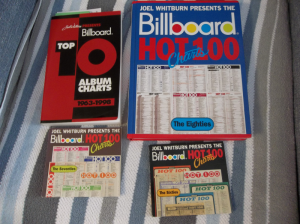
To some people, that might sound like paperwork. To me, it was everything.
It was charts made real. Real inventory, real demand, real music moving in and out of people’s hands.
That rhythm — charts to product to customers — is really the heartbeat behind this whole project.
What This Site Is About
America’s Top 10 Albums covers the years 1965 through 1995 — thirty years of music that I lived through, worked with, and loved deeply.
Each month, I’ll be sharing the chart highlights from that era, walking through the albums that defined their moment and the stories behind them.
But I’ll also be weaving in my own experiences along the way, because I think the charts mean more when you understand the world they came from.
By 1991, things had shifted for me at work. I’d been moved from a high-volume store to a mid-volume store, and honestly, the spark wasn’t the same.
Music had changed. The industry had changed. The “why” that had driven me for fifteen years was fading. I’ll get into all of that in future posts.
But that original “why” — the kid tracking stats in the sports pages, the teenager flipping through Billboard for the first time, the store manager who genuinely loved the Monday order sheet — that’s still the engine running this site.
Thanks for being here. I hope you enjoy the ride.