Billboard's Top 200 Album Sales
Key Takeaway
The week of April 28, 1979, represents a pivotal moment in music history when album-oriented rock (AOR) was reshaping how Americans consumed music.
This wasn't just about hit singles anymore—entire albums were becoming the product, with FM radio stations playing five or six deep cuts from records like Supertramp's Breakfast In America.
Retail stores like Camelot Music were stocking these albums in multiple formats, and customers were buying them based on the complete listening experience rather than chasing one or two singles.
This chart snapshot captures the transition beautifully.
Disco was still riding high with the Bee Gees and Peaches & Herb, classic rock maintained its grip with Bad Company and The Allman Brothers Band, and new wave was breaking through with Blondie's Parallel Lines.
Meanwhile, Supertramp's masterpiece was becoming the soundtrack of the year—a perfect storm of accessible melodies, sophisticated production, and radio-friendly arrangements that kept it spinning in homes and stores across America for months.
This was the era when owning the album mattered, when liner notes were read, and when music fans invested in the full artistic statement.
A Snapshot in Time
Before diving into the music, here's what else was happening in the world during the week of April 28, 1979:
- Margaret Thatcher became the first female Prime Minister of the United Kingdom on May 4, 1979, just days after this chart week, winning the general election and ushering in a conservative era that would reshape British politics for a generation.
- The Nuclear Accident at Three Mile Island was still fresh in American minds, having occurred just one month earlier in March 1979, raising serious questions about nuclear energy and environmental safety across the nation.
- Sony introduced the Walkman in Japan in July 1979, revolutionizing how people would listen to music on the go, though it wouldn't reach American shores until 1980.
- Gas lines were forming across America as the Iranian Revolution triggered the 1979 energy crisis, with motorists waiting hours to fill their tanks and the national mood turning anxious about oil dependency.
- Kramer vs. Kramer and The China Syndrome were dominating movie theaters, reflecting American anxieties about family breakdown and nuclear power respectively.
- Major League Baseball was in full swing, with the Pittsburgh Pirates and Baltimore Orioles heading toward what would become a memorable World Series matchup that fall.
Just as America was experiencing these transformative moments, these were the albums spinning on turntables across the nation.
This Week’s Top Ten Albums in America
- Minute By Minute - The Doobie Brothers
Featuring: "What a Fool Believes," "Minute by Minute" - Spirits Having Flown - Bee Gees
Featuring: "Tragedy," "Too Much Heaven," "Love You Inside Out" - 2 Hot - Peaches & Herb
Featuring: "Reunited," "Shake Your Groove Thing" - Dire Straits - Dire Straits
Featuring: "Sultans of Swing" - Desolation Angels - Bad Company
Featuring: "Rock 'n' Roll Fantasy," "Gone, Gone, Gone" - Parallel Lines - Blondie
Featuring: "Heart of Glass," "One Way or Another" - Livin' Inside Your Love - George Benson
Featuring: "Love Ballad," "Livin' Inside Your Love" - Breakfast In America - Supertramp
Featuring: "The Logical Song," "Goodbye Stranger," "Take the Long Way Home," "Breakfast in America" - Enlightened Rogues - The Allman Brothers
Featuring: "Crazy Love," "Can't Take It With You" - Blondes Have More Fun - Rod Stewart
Featuring: "Da Ya Think I'm Sexy?," "Ain't Love a Bitch"
Album of the Week Spotlight
Breakfast In America- Supertramp
Supertramp- Breakfast In America
 Album of the Week Spotlight
Breakfast In America - Supertramp
Why I Picked It:
This was a huge album. It became a very popular radio airplay album, with as many as five cuts being played heavily by FM radio.
This was now a big deal—playing many cuts from well-produced and popular albums became the standard for progressive FM stations.
I was selling it on vinyl, on cassettes, and some on 8-tracks as well.
My market, being a mid-American-sized city of over 500,000 people, was heavy into the album cuts and less into the old Top 40 radio programming.
So this album fit perfectly and was airplayed a ton for well over seven months in 1979.
Beyond my personal retail experience, Breakfast In America represented a commercial and artistic peak for progressive rock in the late 1970s.
Released on March 29, 1979, the album hit number one on the Billboard 200 and stayed there for six weeks.
It would go on to win two Grammy Awards and become one of the best-selling albums of all time, with over 20 million copies sold worldwide.
What made this album special was its perfect balance of accessibility and sophistication.
Roger Hodgson and Rick Davies crafted songs that were immediately catchy yet layered with complex arrangements, philosophical lyrics, and impeccable production.
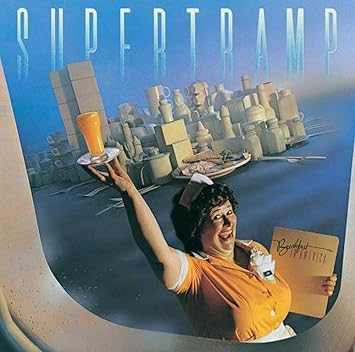
The iconic album cover—featuring a New York skyline recreated with breakfast items viewed through an airplane window—became one of the most recognizable images in rock history.
Critically, the album received widespread acclaim for its seamless blend of pop sensibility and art rock ambition.
Songs like "The Logical Song" questioned modern education and conformity, while "Goodbye Stranger" explored themes of restlessness and escape.
The title track became an anthem for American dreams and disillusionment. This wasn't just background music—it was an album that demanded attention and rewarded repeated listening.
Culturally, Breakfast In America arrived at the perfect moment.
As disco began to fade and punk remained too edgy for mainstream audiences, Supertramp offered sophisticated rock that appealed to college students, young professionals, and longtime rock fans alike.
It proved that albums could still be cohesive artistic statements in an era increasingly dominated by singles.
Modern Features, Classic Sound


My Connection
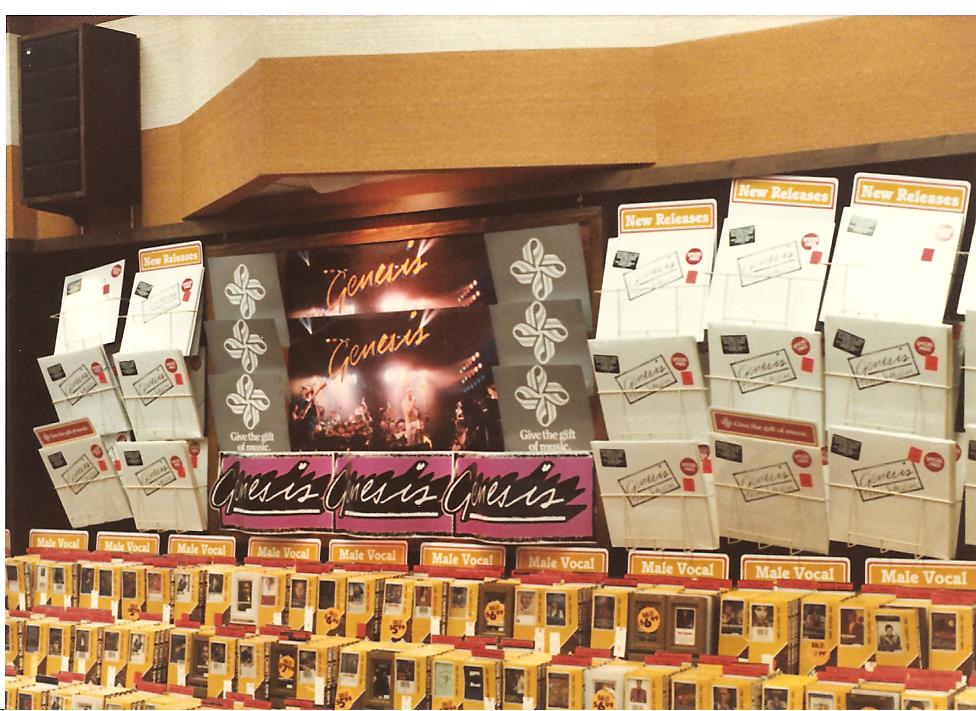
I was the manager of the Camelot Music store in Eastview Mall when this album was released.
This became a very popular in-store play album by my associates. We sold many copies of this great album while playing it in-store.
I was able to keep pace with the sales on this.
My orders were very healthy every week from April through the Christmas season of 1979.
It appeared very often on the wish lists that parents came in looking for—a great Christmas present that year.
It was also a very popular in-store play selection during peak traffic times during the week.
I remember customers asking "What is this?" while shopping, and we'd walk them straight to the Supertramp section.
The album sold itself once people heard it. The packaging was distinctive enough that customers could spot it across the store, and the consistent radio play meant that casual listeners were already primed to buy.
What struck me most was the album's staying power. This wasn't a flash-in-the-pan release that spiked for two weeks and disappeared.
Breakfast In America maintained steady sales month after month, becoming a catalog staple that moved inventory consistently well into 1980.
It was the kind of release that made a retail manager's job easier—reliable, popular, and profitable.
We played the album in-store, but it never got that extra push from energetic staff recommendations.
Thank You for Your Support!
Thank you for being a loyal reader of America's Top Ten Albums Insights!
Your passion for music history and these weekly journeys through classic albums means the world to me.
This blog is supported through affiliate sales, and when you make purchases through links on this site, you're helping keep these stories and memories alive.
I'm grateful for your continued support and for being part of this community that celebrates the soundtrack of our lives.
Here's to many more musical discoveries together!
Cheers, George
Protect • Preserve • Play


Reflections & Insights
This week's chart tells the story of late-1970s music diversity at its peak.
Disco was still commanding attention with the Bee Gees' Spirits Having Flown and Peaches & Herb's infectious 2 Hot, proving that the genre had staying power beyond the dance floor.
Meanwhile, classic rock stalwarts like Bad Company and The Allman Brothers Band held their ground, showing that traditional rock audiences weren't going anywhere.
What's fascinating is how new sounds were breaking through simultaneously.
Dire Straits brought a stripped-down, blues-influenced approach that felt refreshingly different from the overproduced sounds dominating the charts.
Blondie's Parallel Lines represented new wave's commercial breakthrough, proving that punk-influenced music could find mainstream success when paired with pop hooks.
The dominance of album-oriented rock during this period fundamentally changed retail music.
As a store manager, I witnessed firsthand how customers approached music differently.
They weren't just buying singles or asking for "that song on the radio"—they wanted the complete album experience.
This created a more engaged listener base and, frankly, better profit margins for retailers since albums generated more revenue than 45s.
Breakfast In America exemplifies why 1979 was such a golden year for album sales.
The music industry had perfected the art of the LP, delivering productions that justified the album format.Radio stations understood that playing multiple cuts from quality albums kept listeners engaged, and stores like mine became destinations where music fans could discover and discuss these releases.
Looking back, this chart week represents the last gasp of an era before MTV, CDs, and digital music would transform everything.
These were albums meant to be played from start to finish, where sequencing mattered and filler tracks were unacceptable.
The success of records like Breakfast In America proved that when artists delivered quality and retailers supported it with in-store play and knowledgeable staff, everybody won.
Billboard Album Charts History
 Trivia Corner
- Fun Fact 1: The iconic cover of Breakfast In America was shot by photographer Mike Doud and art director Mick Haggerty. The "Statue of Liberty" is actually waitress Kate Murtagh holding a glass of orange juice, and the New York skyline was constructed entirely from breakfast items like plates, cups, and salt shakers on a tabletop.
- Fun Fact 2: "The Logical Song" from Breakfast In America was inspired by Roger Hodgson's experiences at boarding school in England. The song's questioning of conformity and education resonated deeply with listeners worldwide, reaching number six on the Billboard Hot 100.
- Fun Fact 3: The Doobie Brothers' "What a Fool Believes," which helped propel Minute By Minute to the top spot, was co-written by Michael McDonald and Kenny Loggins. It won Grammy Awards for both Song of the Year and Record of the Year in 1980, cementing its place in music history.
 Frequently Asked Questions (FAQ)
Q: Why was album-oriented rock (AOR) so dominant in 1979?
A: By 1979, FM radio stations had fully embraced the album format, playing multiple tracks from well-produced LPs rather than just singles.
This created a symbiotic relationship between radio, artists, and retailers. Listeners developed deeper connections with albums, artists had creative freedom to craft cohesive works, and stores could sell higher-margin products.
The technology of vinyl pressing and stereo equipment had also matured, making the listening experience at home truly immersive.
Q: How did Supertramp's Breakfast In America achieve such massive commercial success?
A: The album succeeded through a perfect combination of factors: radio-friendly yet sophisticated songwriting, impeccable production quality, memorable melodies, and philosophical lyrics that resonated with late-1970s audiences.
Additionally, heavy FM radio rotation of multiple tracks created sustained interest, while the distinctive cover art made it instantly recognizable in stores.
The timing was ideal, arriving as prog rock was becoming more accessible and appealing to mainstream listeners.
Q: What formats were albums sold in during 1979?
A: In 1979, albums were primarily sold in three formats: vinyl LPs (12-inch records), cassette tapes, and 8-track tapes.
Vinyl was still the dominant format and preferred by audiophiles for sound quality. Cassettes were growing rapidly due to their portability and use in cars and portable players.
8-tracks were declining but still sold, particularly for older car stereo systems. CDs wouldn't be introduced until 1982.
Q: How did music retail stores like Camelot Music operate in 1979?
A: Music retail stores in 1979 were destination shopping experiences.
Stores featured listening stations where customers could preview albums, knowledgeable staff who could make recommendations, and in-store play of current releases that created atmosphere and drove impulse purchases.
Managers tracked Billboard charts closely to maintain inventory, and the physical browsing experience was central to music discovery.
Stores also carried music magazines, posters, and related merchandise, creating a comprehensive music culture hub.
Join The Conversation
What were you listening to this week in history? Did you buy one of these albums when it was new?
Share your memories below, or join the discussion on our Music in the 1970s Facebook page to keep the needle spinning.
Follow Music In The 1970s
Love classic rock, soul, and everything 70s?
Join us for daily album insights, rare stories, and lively discussions.
Keep the golden era of music alive with fellow fans!
Visit Music In The 1970s
Music in the 1970s