Billboard's Top 200 Album Charts
Key Takeaway
The week of May 25, 1985, captures a pivotal moment when the music industry was in the midst of a technological revolution.
This chart reflects the transitional era when vinyl was giving way to cassettes and the emerging compact disc format—a shift that would forever change how we consumed music.
What makes this week particularly fascinating is the eclectic mix dominating the charts: Phil Collins' polished pop-rock sat alongside Prince's psychedelic funk, while Bruce Springsteen's heartland anthems competed with Madonna's provocative pop and the sophisticated British new wave of Tears For Fears.
This wasn't just a collection of hit albums—it was a snapshot of American culture at a crossroads.
The USA For Africa humanitarian effort shared chart space with the escapism of Beverly Hills Cop, while Sade brought smooth sophistication to a landscape still dominated by the MTV generation's visual appeal.
These ten albums represented more than sales figures; they were the soundtrack to a nation moving forward from the early Reagan years, embracing new technology, and experiencing an unprecedented diversity in mainstream pop music that we rarely see today.
A Snapshot in Time
Before diving into the music, here's what else was happening in the world during this week in May 1985:
- Memorial Day Weekend marked the unofficial start of summer, with Americans gathering for barbecues and remembering fallen soldiers, while the nation was still healing from the Vietnam War era
- The Coca-Cola Company was dealing with the fallout from their disastrous "New Coke" introduction just weeks earlier (April 23), with protests growing louder and the company scrambling to respond to consumer outrage
- Philadelphia was still reeling from the controversial MOVE bombing that occurred on May 13, just twelve days earlier, where police dropped explosives on a residential building, killing 11 people and destroying 61 homes
- The NBA Finals were heating up as the Los Angeles Lakers faced the Boston Celtics in one of the greatest rivalries in sports history, with Larry Bird and Magic Johnson captivating the nation
- Live Aid was being planned for July 13, building on the momentum of the USA For Africa's "We Are the World" single, as Bob Geldof organized what would become the largest simultaneous concert event in history
- The Cold War continued as President Reagan and Soviet leader Mikhail Gorbachev (who had just taken power in March) were beginning early diplomatic talks that would eventually lead to a thaw in U.S.-Soviet relations
Just as America was experiencing these transformative moments, these were the albums spinning on turntables, cassette decks, and the new CD players across the nation.
This Week’s Top Ten Albums in America
No Jacket Required - Phil Collins
Featuring: "Sussudio," "One More Night," "Don't Lose My Number"
Around The World In A Day - Prince
Featuring: "Raspberry Beret," "Paisley Park"
Beverly Hills Cop - Movie Soundtrack
Featuring: "Axel F" by Harold Faltermeyer, "The Heat Is On" by Glenn Frey, "Neutron Dance" by The Pointer Sisters
Born In The USA - Bruce Springsteen
Featuring: "Born in the U.S.A.," "Dancing in the Dark," "Glory Days," "I'm On Fire"
We Are The World - USA For Africa
Featuring: "We Are the World"
Diamond Life - Sade
Featuring: "Smooth Operator," "Your Love Is King"
Like A Virgin - Madonna
Featuring: "Like a Virgin," "Material Girl," "Into the Groove"
Make It Big - Wham!
Featuring: "Wake Me Up Before You Go-Go," "Careless Whisper," "Everything She Wants"
Songs From The Big Chair - Tears For Fears
Featuring: "Shout," "Everybody Wants to Rule the World," "Head Over Heels"
Southern Accents - Tom Petty & The Heartbreakers
Featuring: "Don't Come Around Here No More," "Make It Better (Forget About Me)
Album of the Week Spotlight
Songs From The Big Chair - Tears For Fears
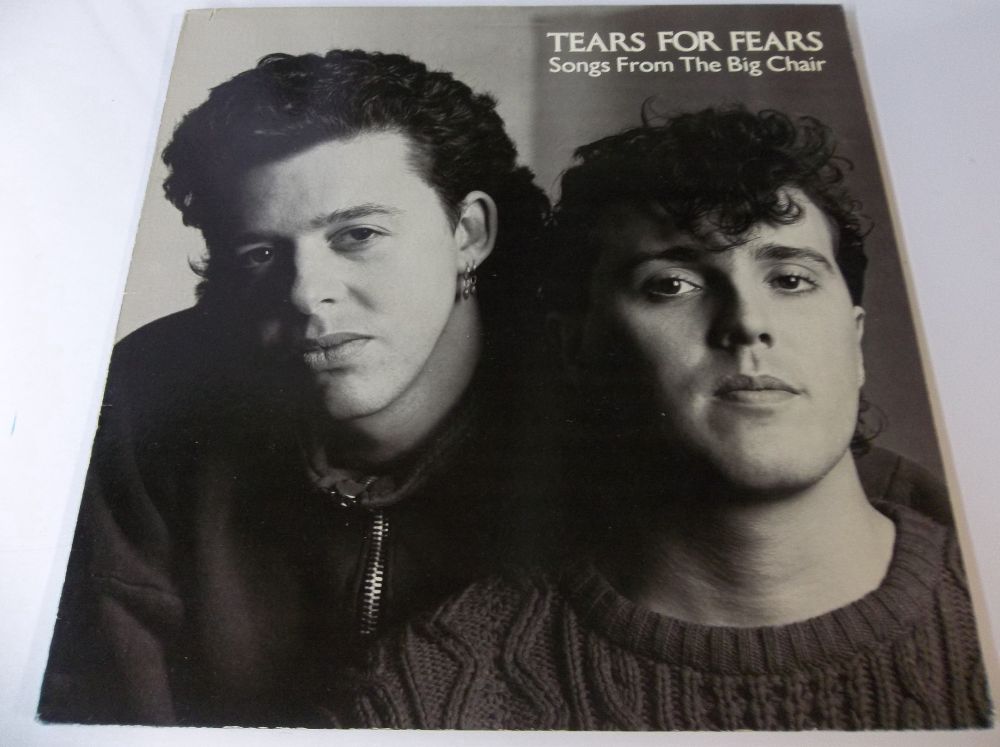
Songs From The Big Chair – Tears For Fears
 Album of the Week Spotlight
Songs From The Big Chair - Tears For Fears
Why I Picked It:
This was a huge album. I sold it to customers mostly on compact disc configuration.
A few cassettes as well—vinyl albums were now a thing of the past.
This was an excellent new fresh breath of air with a unique sound, great songwriting, and my favorite part is this is still to this day a great driving album that really lifts your spirits on a long car trip.
Beyond my personal experience, Songs From The Big Chair represented a sophisticated evolution in pop music that challenged listeners intellectually while remaining emotionally accessible.
Roland Orzabal and Curt Smith crafted an album that dealt with heavy themes—power, control, and emotional vulnerability—wrapped in irresistibly catchy melodies.
The production was immaculate, utilizing the latest studio technology to create layered soundscapes that revealed something new with each listen.
Critics praised it for bridging the gap between art-rock ambition and commercial appeal, something few bands achieved so successfully in the mid-80s.
Released in February 1985, the album was a slow burn that built momentum throughout the spring.
"Shout" had already hit #1 in the US in August 1984 (from advance release), but it was "Everybody Wants to Rule the World" reaching #1 in June 1985 that solidified the album's place in pop culture history.
The album would eventually sell over 5 million copies in the US alone and spend five weeks at #1 on the Billboard 200.
What made it matter culturally was how it captured the anxiety and ambition of the mid-Reagan era—songs about world domination and emotional breakdown resonated with a generation navigating rapid technological change and geopolitical uncertainty.
Musically, Tears For Fears distinguished themselves from the synth-pop pack by incorporating real instruments alongside synthesizers, creating a fuller, more organic sound.
The influence of artists like Peter Gabriel and Talk Talk was evident, but they carved out their own identity.
The album's title referenced a book about primal scream therapy, and that psychological depth permeated every track.
This wasn't just dance-floor fodder—it was thinking person's pop music that didn't sacrifice accessibility for intelligence.
Say Goodbye to Skips and Static!


My Connection
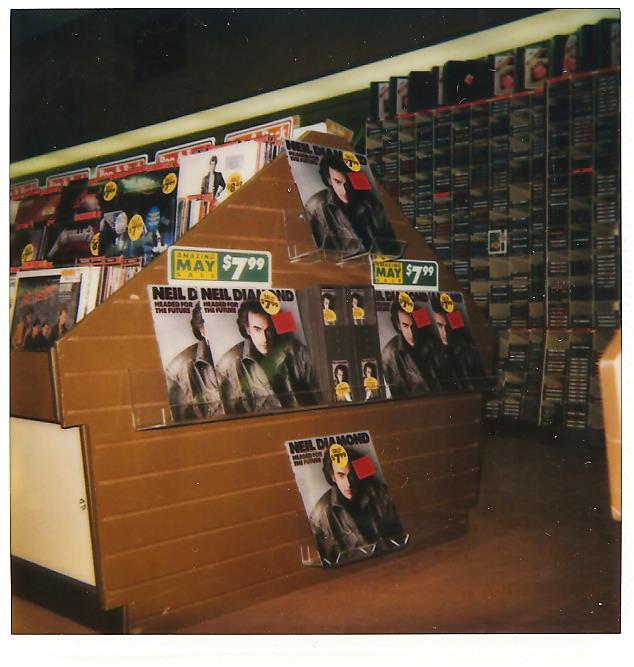
I was the manager of the Camelot Music store at Park City Mall, Lancaster, when this album was released.
This was a very popular and a great seller in the music compact disc section of my store.
Also, many cassettes were sold because this is a great album to listen to on a walk or car trip.
It was also a very popular in-store play selection during peak traffic times during the week.
It invigorated many customers, and on long working days as an associate, it was awesome to get to listen to this as well.
I remember customers of all ages connecting with it—teenagers loved the energy of "Shout," while older buyers appreciated the musicianship and production quality.
It became one of those albums that helped sell CD players themselves, as people wanted to experience the pristine clarity of "Everybody Wants to Rule the World" in the new digital format.
Reflections & Insights
This week's chart tells the story of an industry and culture in transition.
The dominance of CD and cassette sales over vinyl marked a technological shift that would be as profound as the later shift from physical to digital music.
What's remarkable is the diversity represented here—you have Phil Collins' slick pop-rock, Prince's experimental funk, Springsteen's heartland anthems, and Sade's sophisticated jazz-inflected soul all coexisting in the top ten.
This kind of stylistic range in mainstream success seems almost impossible in today's more fragmented music landscape.
The presence of We Are the World at #5 reflects the mid-80s phenomenon of celebrity activism and the belief that popular music could be a force for global change.
Meanwhile, the Beverly Hills Cop soundtrack demonstrated how film was becoming an increasingly important driver of music sales—a trend that would dominate the late 80s and 90s.
Looking at this chart from 2025, it's striking how many of these albums have endured.
Nearly every entry is still considered a classic, still played on radio, still influencing contemporary artists. This wasn't just a good week for music—it was a historic one.
 Trivia Corner
- Fun Fact 1: Songs From The Big Chair got its title from the 1976 TV movie Sybil, in which a psychiatrist treating a patient with multiple personality disorder sits in a big chair. The film explores primal therapy, which heavily influenced the album's themes.
- Fun Fact 2: "Everybody Wants to Rule the World" was written in a single day and was almost left off the album. The band thought it was "too simple" and nearly gave it away to another artist. It became their biggest hit in America, reaching #1 and earning them a Brit Award.
- Fun Fact 3: Tears For Fears performed "Shout" at Live Aid on July 13, 1985, just weeks after this chart week, introducing them to a global television audience of nearly 2 billion people. The performance helped push the album to even greater heights internationally.
Retro Vinyl
 Frequently Asked Questions (FAQ)
Q: Why were so many formats (vinyl, cassette, CD) selling simultaneously in 1985?
A: 1985 was a transitional year in music retail.
CDs had been introduced in 1982 but were still relatively expensive, requiring new players many consumers hadn't purchased yet.
Cassettes were at their peak for portability and car stereos, while vinyl was still preferred by audiophiles and those with existing turntable systems.
By late 1986, CD sales would begin to definitively overtake vinyl.
Q: How did albums chart in 1985 compared to today?
A: In 1985, Billboard's album chart was based on physical sales data collected from retail stores.
Albums typically stayed on charts much longer—weeks or even months in the top ten.
Today's charts incorporate streaming data and digital downloads, resulting in more volatile week-to-week changes and shorter chart runs for most releases.
Q: What made Camelot Music stores significant in 1980s music retail?
A: Camelot Music was one of the largest mall-based music retail chains in America during the 1980s and 1990s, with over 400 stores at its peak.
These stores were cultural hubs where music fans could browse, listen to new releases at listening stations, and discover music recommended by knowledgeable staff.
The chain filed for bankruptcy in 1997 as big-box retailers began dominating music sales.
Q: Were any of these albums considered controversial when released?
A: Yes, several. Madonna's Like a Virgin faced criticism from conservative groups for its sexual content and imagery.
Prince's Around the World in a Day surprised fans with its departure from the Purple Rain sound.
Even Springsteen's Born in the U.S.A. was controversial—many listeners (including some politicians) misinterpreted the title track as a patriotic anthem when it was actually a critique of Vietnam War treatment of veterans.
Join The Conversation
What were you listening to this week in history? Did you buy one of these albums when it was new?
Share your memories below, or join the discussion on our Music in the 1970s Facebook page to keep the needle spinning.
Follow Music In The 1970s
Love classic rock, soul, and everything 70s?
Join us for daily album insights, rare stories, and lively discussions.
Keep the golden era of music alive with fellow fans!
Visit Music In The 1970s
Music in the 1970s